Structural Drying & Dehumidification in Edmond

Water from a roof leak, appliance, or burst pipe can remain inside walls, beneath flooring, or around framing after the visible leak is gone. We assess affected materials and room conditions, then use airflow, dehumidification, and repeat moisture checks to guide drying.

Moisture Control for Homes, Offices, and Multi-Unit Properties

We inspect affected building materials and look for moisture beyond the visible stain or wet floor. The drying plan reflects the source, construction, room conditions, and which areas can be accessed without unnecessary disturbance.

Call Now: (877) 852-4767

Moisture Mapping and Controlled Drying

Water does not always stay where it first appears. A leak in an upper room can reach trim and framing below; storm entry or a plumbing failure can also move into subflooring, insulation, and closed cavities before the full extent is obvious.

We start by locating where moisture has gathered and comparing affected readings with nearby unaffected materials. Airflow, humidity control, and equipment placement are then considered in relation to the building and the materials involved.

A plumbing failure, roof leak, appliance overflow, or storm intrusion leaves a different moisture path. We explain the initial readings, keep track of changing conditions, and adjust the drying plan when affected areas respond differently.
24/7 DRYING RESPONSE
(877) 852-4767
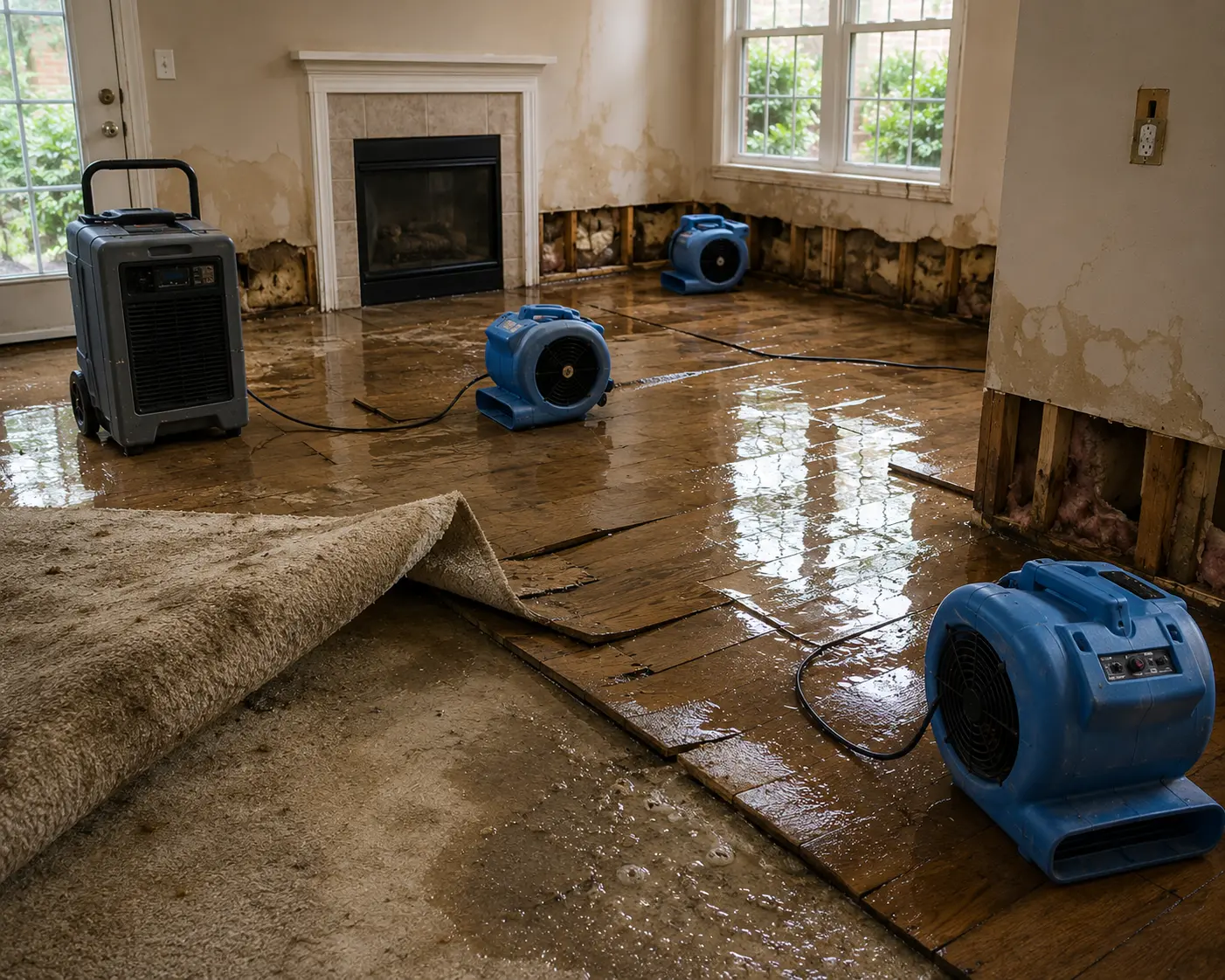
Technicians applying drying equipment and monitoring moisture in an Edmond property

Why Property Owners Choose Our Drying Team

Rapid Moisture Detection

Readings and visual checks help locate damp areas in framing, finishes, and accessible cavities; concealed assemblies may need further evaluation when the evidence points to retained moisture.

Commercial-Grade Air Movement

Air movers direct airflow across selected surfaces, while placement is adjusted for room layout, contents, and the materials being dried.

Humidity Control That Protects the Structure

Dehumidifiers collect moisture released into indoor air. Their use is guided by room conditions and readings rather than assuming outdoor Edmond weather will dry a closed wall or floor assembly.

Clear Progress Reporting

We compare follow-up moisture conditions with the initial assessment and share what has changed, what still needs attention, and when repair planning can proceed.

How Structural Drying Is Managed

A pipe leak during a freeze, storm-related roof entry, and appliance overflow can leave moisture in different assemblies. We use the source and observed readings to guide equipment placement, check progress, and explain the remaining steps toward a usable space.

Inspection & Moisture Mapping

We review the reported source, inspect visible and accessible materials, and record where moisture is concentrated before selecting drying priorities.

Airflow & Equipment Setup

Air movers and dehumidifiers are arranged for the affected rooms and materials. Where needed, separation helps keep drying work focused and limits movement into unaffected areas.

Dehumidification & Monitoring

We check readings while equipment is operating and compare them with earlier conditions, so changes in the affected materials can guide the next adjustment.

Targeted Adjustments

If a wall edge, subfloor, or cabinet base responds more slowly than the surrounding room, airflow or equipment placement can be reviewed instead of treating the whole area as equally dry.

Drying Completion Review

We review the available moisture readings and conditions with the owner so repair planning can move forward with a clearer understanding of the affected structure.

Frequently Asked Questions

Structural Drying Help Near You

We help Edmond homes, offices, and multi-unit properties investigate moisture after leaks, freezes, and storms. Describe when the water entered and which surfaces remain damp so the assessment can focus on likely paths through the building.

Structural drying matters when water moves beneath flooring, into wall cavities, or around framing beyond ordinary surface cleanup. Edmond weather shifts between humid storm periods and dry, windy conditions, but outdoor air cannot show whether a closed building assembly is dry. Readings from affected materials and comparison areas guide equipment placement and show whether moisture is changing. Air movers support evaporation; dehumidification manages water vapor released into the room, and both need to fit the building and its contents. Keep equipment pathways clear and report new leaks, unusual odors, or areas that remain damp. Progress checks help determine whether airflow or placement needs adjustment instead of assuming a fixed number of days is enough. This approach applies in Edmond, Oklahoma City, Arcadia, and Guthrie after plumbing leaks, severe storms, or freeze-related pipe breaks, with the plan based on observed conditions at each property.

Contact Our Structural Drying Team

Tell us what happened, when the moisture was noticed, which materials feel damp, and whether the source is active. We can discuss assessment and drying steps for your Edmond property.

  • Emergency drying support available 24/7
  • Service area: Edmond, Oklahoma and nearby communities
  • Services: moisture mapping, dehumidification, drying, monitoring, repairs

Request Structural Drying Help

Call Now: (877) 852-4767