After a leak or flood in Edmond, visible water may be gone while dampness remains under flooring, behind trim, or inside a wall. We assess affected materials and room conditions, then discuss drying and humidity control based on the source and extent of the moisture.
Wiping visible water does not show whether a wall cavity, cabinet base, or floor layer is dry. We check affected areas and nearby materials, then explain which moisture-control steps fit the building, the original water source, and the conditions observed.
A roof leak during a severe storm, a slow plumbing drip, or a winter pipe break can leave dampness behind trim and finishes. We consider how water entered and inspect beyond the visible stain, since a mark alone does not show the full moisture boundary.
Drying and humidity control are central to prevention. We consider airflow, indoor conditions, and whether wet materials may dry in place or need further evaluation. Covering a mark or masking an odor does not resolve moisture beneath the surface.
Heavy rain, hail, and flash flooding can reveal roof or low-level entry points around Edmond, while freezes can stress plumbing. We tailor inspection and drying to the event, distinguishing outdoor water from an indoor leak before choosing cleanup steps.
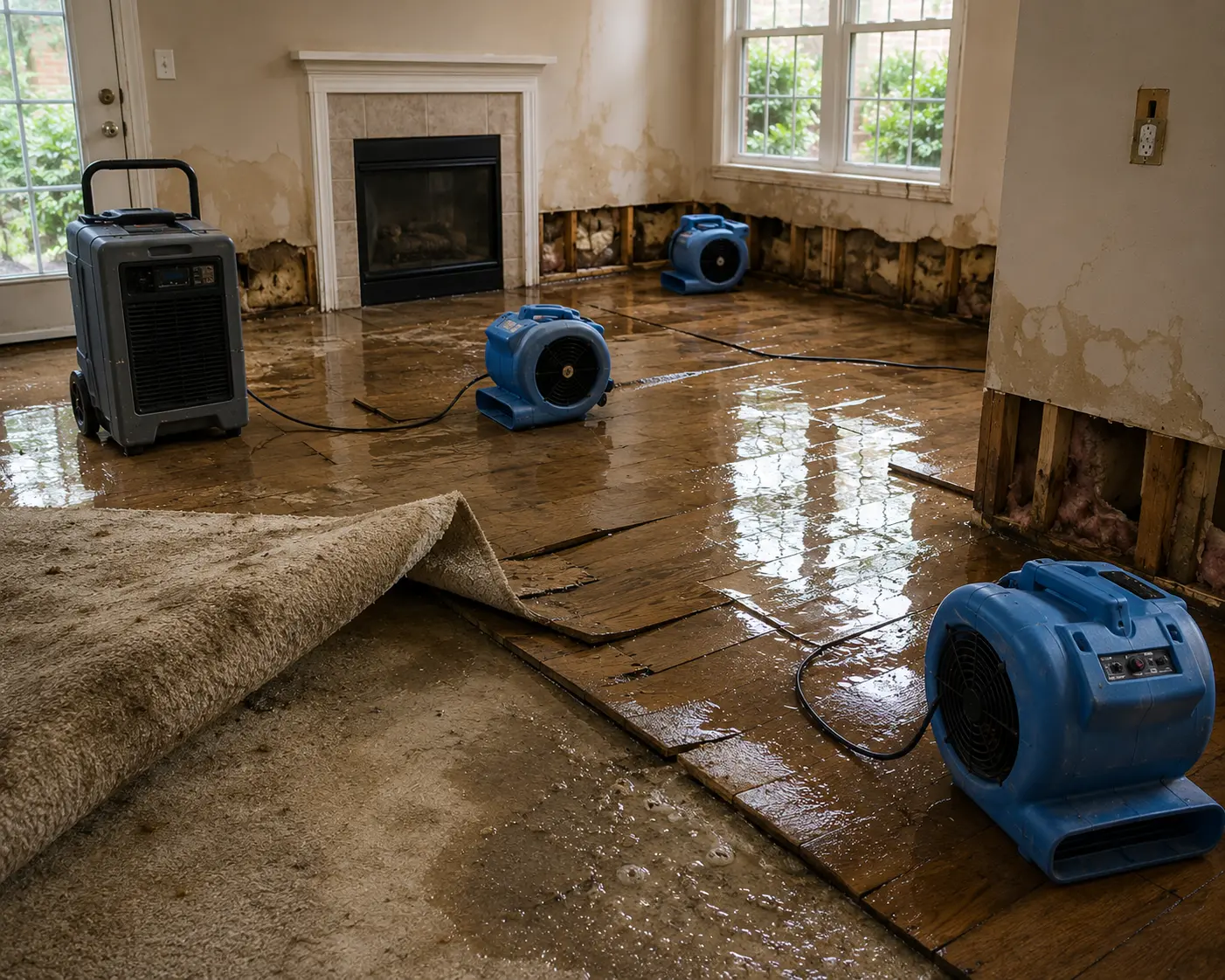
Mold risk rises quickly when moisture remains trapped, so urgent concerns are handled with priority to limit exposure and spread.
We assess the source, affected materials, airflow, and moisture readings, then explain drying and sanitation steps that fit the observed conditions.
Air movers, dehumidifiers, and moisture meters help identify hidden dampness and dry the affected materials thoroughly.
We provide photos, moisture logs, and clear documentation to help support a smoother insurance claim process.
A roof leak after hail, a slow cabinet leak, and a frozen pipe can leave moisture in different parts of a building. We look for the source and extent, then focus on drying, humidity control, and any material concerns rather than promising that one treatment prevents every future problem.
We identify the source of the moisture, the materials affected, the humidity level, and the risk areas before prevention work begins.
Standing water is extracted from accessible areas to reduce saturation and prepare the property for controlled drying.
Drying equipment is placed and monitored to pull moisture from air, surfaces, and structural materials.
Affected areas are cleaned, odors are addressed, and contaminated surfaces are treated based on the water source and exposure level.
Once the area is dry, we can recommend prevention steps and monitor the space so mold risk stays low after the initial recovery work.
We prioritize moisture-related calls and move quickly to reduce humidity, dry affected materials, and limit the conditions that allow mold to grow.
Mold develops when wet drywall, carpet, wood, and insulation stay damp long enough for spores to settle and spread.
Yes. Mold prevention continues through drying, airflow management, material evaluation, and sanitation so hidden moisture does not linger.
We record moisture readings, affected areas, and cleanup steps so homeowners and property managers can share clear information with their insurance provider.
A lingering musty smell can signal hidden moisture, so it is important to schedule an inspection quickly and reduce humidity before mold spreads.
We help Edmond property owners investigate lingering dampness after a leak, storm, or flood. Share when the area became wet, whether the source has stopped, and where odor or staining remains so the assessment can focus on likely moisture paths.
Humid weather after heavy rain can slow indoor drying, while a winter pipe leak may stay hidden until staining or odor appears. Prevention starts with addressing the moisture source, not covering a mark or relying on a fan alone. Dampness can remain behind baseboards, under flooring, inside insulation, or around cabinets after visible water is wiped away. An assessment helps show which materials may dry in place and which need further evaluation. Keep people away from unsafe or suspect areas, avoid disturbing damaged materials, and call if dampness returns or spreads. We explain drying priorities and check conditions so owners can make informed choices. In Edmond, Oklahoma City, Arcadia, and Guthrie, the right approach depends on the building, whether water came from a storm or plumbing, and how long materials were wet.
Call with the water source, when the area became wet, which materials are affected, and whether dampness or odor remains. We can discuss moisture-control steps for your Edmond property.