Heavy rain, hail, or flash flooding can move water into an Edmond property quickly, reaching floors, walls, cabinets, and belongings. We first consider safe access and the water source, then discuss removal, debris, drying, and cleanup priorities.
After water enters a property, the first decisions depend on whether it is safe to enter and whether the water is still rising. We assess affected areas, remove accessible standing water, and explain what cleanup and drying the observed conditions call for.
Floodwater can cross a garage, doorway, or low opening and carry soil, debris, and other contaminants into rooms that may look untouched. We identify the apparent boundary, keep affected areas separate, and check adjoining floors and wall edges before setting cleanup priorities.
We focus on accessible water removal, debris handling, humidity control, and evaluating materials that may be retained or need removal. A measured assessment helps move from storm response to organized recovery without treating every wet surface as the same problem.
Stormwater, a drain backup, a plumbing failure, and an overflowing appliance each create different cleanup needs. We explain the source-related concerns, what is visible, and which next steps are appropriate for the affected Edmond rooms.
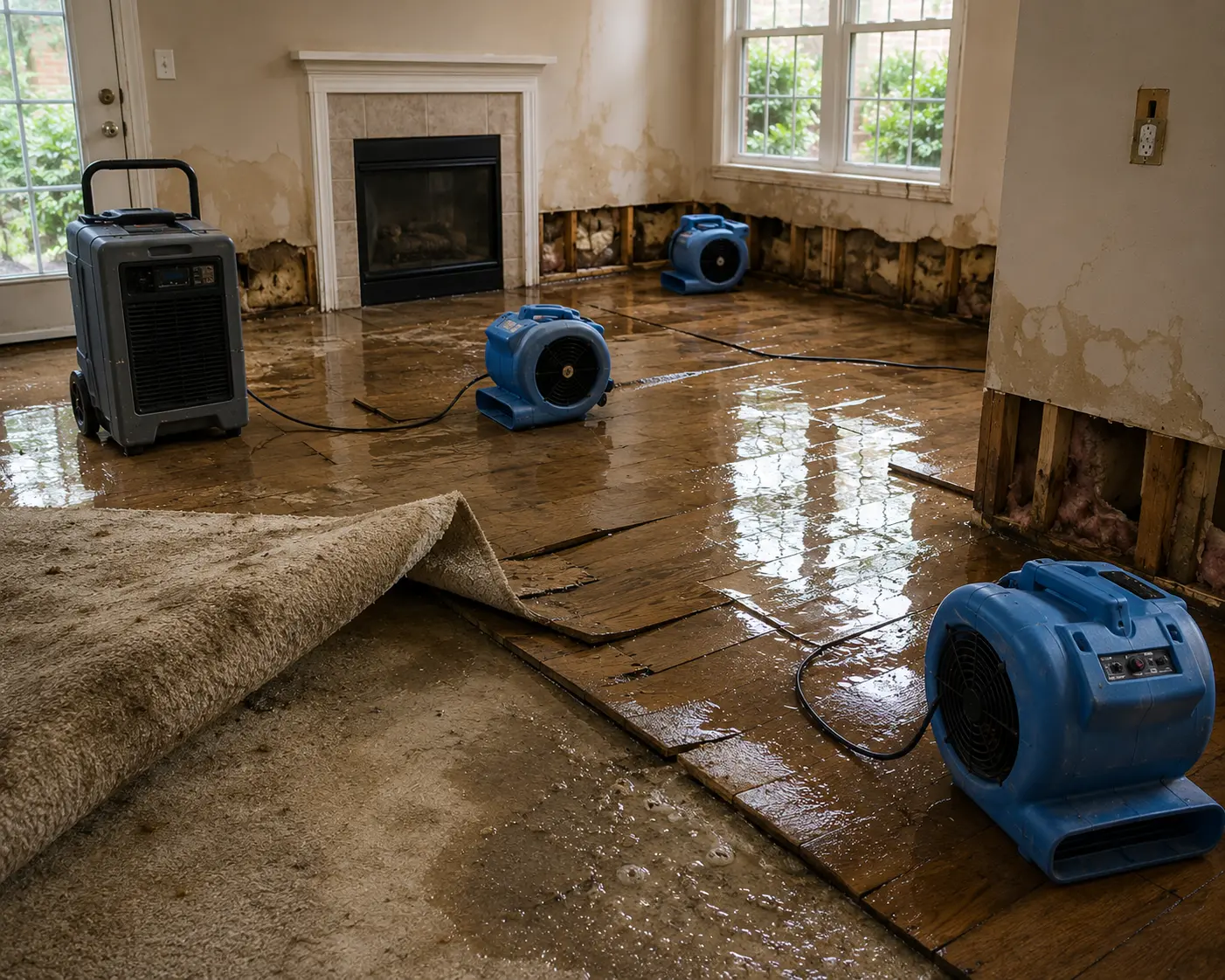
Flood events worsen quickly, so urgent requests are handled with priority to reduce water spread and protect the structure.
We base cleanup choices on the water source, visible debris, affected materials, and safe access, then explain what is being removed, cleaned, or monitored.
Air movers, dehumidifiers, and moisture meters help locate hidden saturation and dry walls, floors, and cabinets more thoroughly.
We provide photos, moisture logs, and clear documentation to help support a smoother insurance claim process.
Flash flooding after a strong Oklahoma storm differs from a small indoor leak. We assess where water entered, whether it carried debris, and which rooms and materials are involved before planning removal, cleaning, drying, and repair follow-up.
We identify the source of the flood, the condition of the materials, the moisture levels, and any safety concerns before cleanup begins.
Standing water is extracted from accessible areas to reduce saturation and prepare the property for controlled drying.
Drying equipment is placed and monitored to pull moisture from air, surfaces, and structural materials.
Affected areas are cleaned, odors are addressed, and contaminated surfaces are treated based on the water source and exposure level.
Once the area is dry, damaged materials can be repaired or replaced and the space can be returned to normal use safely.
We prioritize flood calls and begin with water removal, debris clearing, and drying so the structure can be stabilized before secondary damage spreads.
If it is safe, shut off electricity to affected areas, move valuables to higher ground, and avoid walking through contaminated water until professionals arrive.
Yes. Saturated drywall, carpeting, insulation, and wood can hold moisture long after the water is gone, which is why fast drying and sanitation matter.
We document affected areas, moisture levels, and cleanup work so property owners can share accurate information with their insurance carrier.
The timeline depends on how much water entered the property, which materials were affected, and how quickly drying equipment can be deployed. We provide a clear estimate after inspection.
We assist Edmond homes and businesses after intense rain, fast runoff, and other flood events. Tell us how water entered, whether it is still rising, and if the building has electrical or structural concerns so safe next steps can be discussed.
Central Oklahoma storms can bring intense rain, hail, fast runoff, and flash flooding into garages, lower levels, and ground-floor rooms. Water that crossed soil or pavement may carry sediment and contaminants, so avoid contact and keep children and pets away. If conditions are safe, move important belongings above the wet area and photograph visible damage before cleanup. Do not enter if water is near electrical equipment or the building appears unstable. We assess the entry point, how far water traveled, and which porous materials may need removal, then set priorities for extraction, debris handling, cleaning, and structural drying. In Edmond and across Oklahoma County, drainage and elevation can vary from one property to another; nearby Arcadia, Guthrie, and Oklahoma City may see different effects from the same storm. A call describing water depth, duration, and affected rooms helps establish a useful first assessment.
Tell us how water entered, how far it traveled, when it was noticed, and whether the source is still active. We can discuss immediate next steps and flood cleanup for your Edmond property.