A burst line, appliance failure, roof leak, or storm-driven intrusion can leave water across an Edmond floor before the source is clear. We discuss safe access first, remove water that can be reached, and check what remains damp after the visible pool is gone.
Extraction is more than clearing the visible pool. We check adjacent rooms and floor edges, remove accessible water, and explain what further drying or cleaning may be needed based on whether the source was a pipe, appliance, roof, or outdoor flooding.
Water from a laundry or kitchen leak can cross a doorway, travel beneath flooring, or collect behind baseboards before the full extent is apparent. We trace the route, note electrical or structural concerns, and prioritize extraction in areas that can be reached safely.
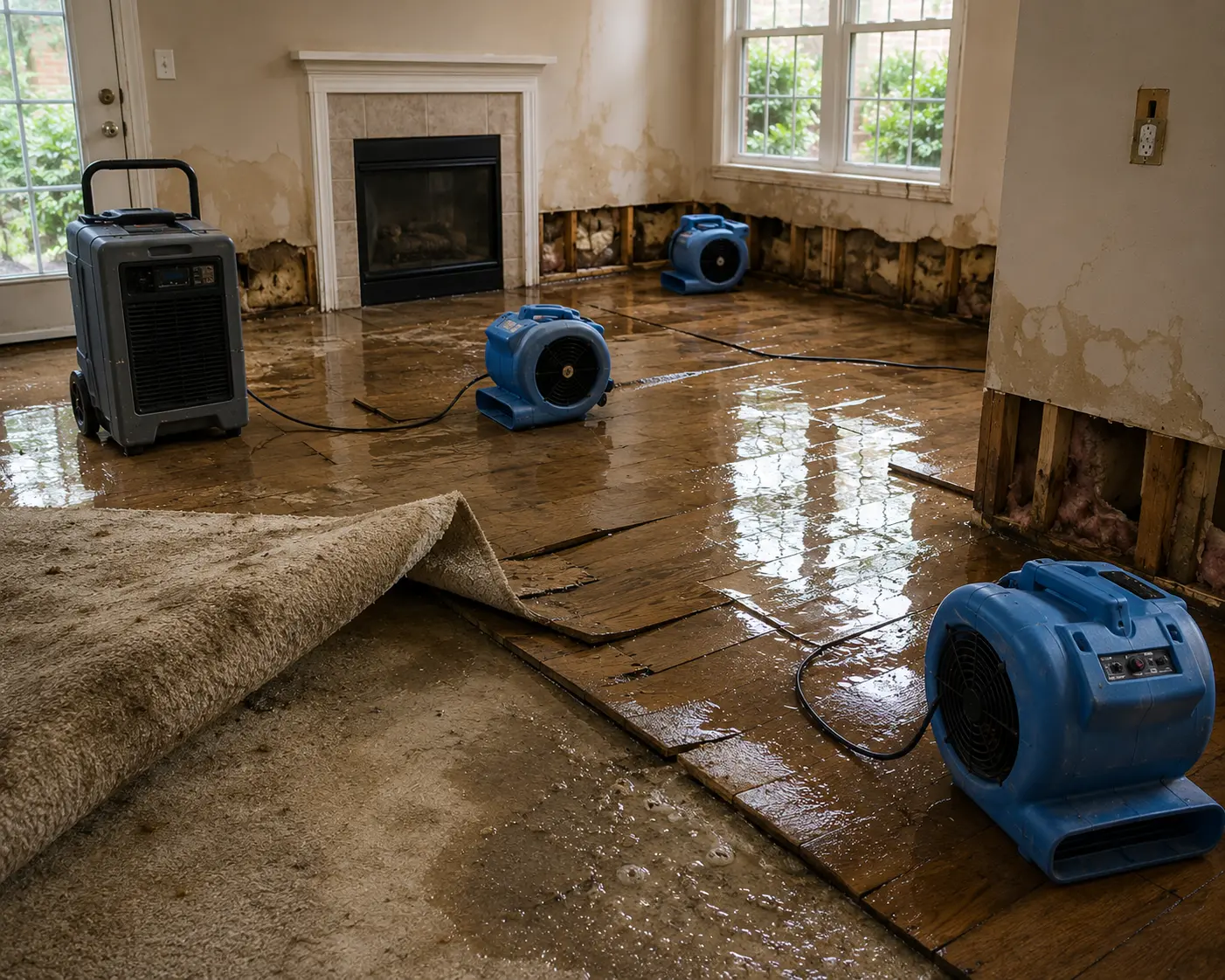
After standing water is removed, airflow and dehumidification help manage moisture released from building materials. We check conditions and adjust equipment as needed; a calendar estimate alone cannot show whether a wet floor edge or wall has dried.
Edmond storms can bring hail and intense rain, while winter freezes can expose plumbing weaknesses. We distinguish a supply-line leak from stormwater or a drain backup because the source changes safety precautions, cleanup choices, and the surfaces that need closer attention.
When water is still flowing, tell us whether the source has been shut off and whether electrical equipment is affected so access can be considered safely.
We organize extraction around the source, the rooms reached, and surfaces that may retain moisture after water is removed. A garage entry during heavy rain, for example, may call for different cleanup from a kitchen supply-line leak.
Moisture checks help show where water remains after extraction; air movers and dehumidification then support drying in affected rooms.
Notes and photos of affected areas can help owners explain the water loss and mitigation work to their insurance representative.
A clean-water leak and stormwater intrusion do not call for identical cleanup. We identify the source and plan removal, surface cleaning, and drying around the materials, exposure, and safe access at the property.
We check how water entered, which areas are wet, and whether electrical or structural hazards affect the route of access.
Accessible water is removed from floor coverings and hard surfaces, with remaining damp areas noted for follow-up.
Equipment is arranged to support airflow and humidity control, then checked as the affected materials begin to dry.
Cleaning and sanitizing choices reflect the water source; storm runoff and drain water need different handling from a supply-line leak.
After drying, the remaining repair needs can be reviewed and the rooms prepared to return to ordinary use.
We prioritize urgent calls and dispatch crews as quickly as possible so standing water can be removed and drying can begin before secondary damage spreads.
We respond to burst pipes, appliance failures, overflowed fixtures, roof leaks, storm-driven intrusions, and other sudden water events that require immediate extraction.
Yes. Removing water quickly and setting up airflow and dehumidification helps reduce moisture that can lead to mold, odors, and material damage.
We document affected areas, moisture readings, and the work completed so homeowners and property managers can share clear information with their insurance carrier.
If it is safe, shut off the water source, avoid standing water near outlets, and move valuables away from the affected area until our team arrives.
We assist Edmond homes, rentals, and businesses after sudden leaks and storm-related water entry. When you call, share whether water is still flowing, which floor or rooms are wet, and if debris or sewage is present so the first safety and extraction priorities are clear.
An appliance hose, overflowing fixture, roof opening, or severe storm can put water inside an Edmond building. Keep away from water near outlets, do not use a household vacuum on standing water, and leave contaminated water undisturbed. When calling, note whether the source is active, which floors are affected, and whether water carries soil or debris. These details help establish safe access and extraction priorities. We remove accessible water, check edges and adjoining rooms for moisture that may remain after the surface clears, and arrange airflow and dehumidification for the room conditions. Heavy rain and hail can drive water into garages or lower-level openings, while a freeze can expose a plumbing leak after temperatures rise. Across Edmond, Oklahoma City, Arcadia, and Guthrie, the source and affected materials guide cleanup rather than a one-size-fits-all response.
Call with the source, when the water started, which rooms are affected, and any immediate safety concern. We can discuss next steps for emergency extraction at your Edmond property.